Trizeflow Finance review: the phone-first platform, tested
A composed money app with an unusually serious engine room—and the usual young-platform caveats.
Verdict: This trizeflow finance review lands at a provisional 4.4/5. The platform pairs a genuinely calm phone-first daily routine with the most transparent AI investing architecture we have examined—a four-system engine with an auditable decision trail. It is early stage with no long public track record, so start small and let it earn trust.
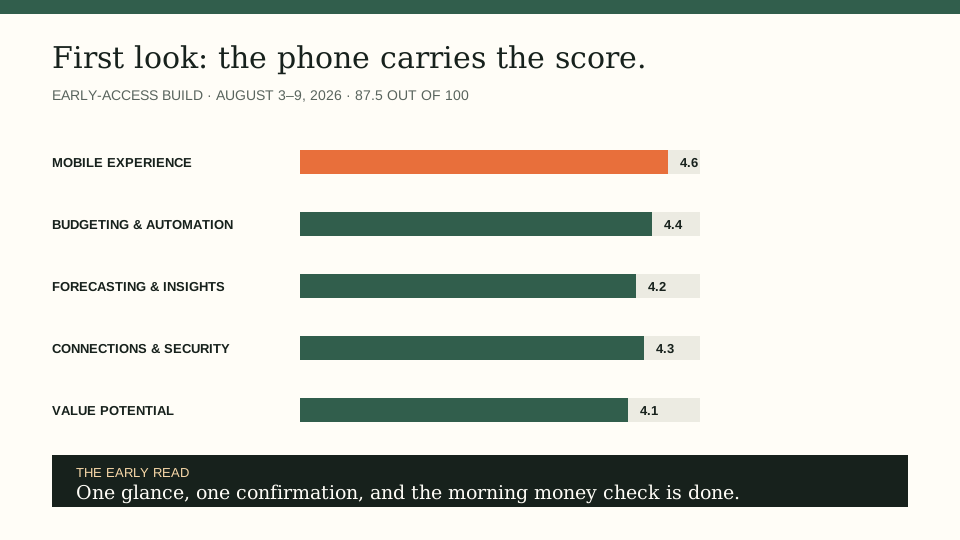
trizeflow finance is one platform with two altitudes: a phone-first app for the money morning, and beneath it an AI invest engine the company describes as deliberately quiet. The stated ingredients are four cooperating systems, five years of live market observation behind the models, and app plus web access under six principles—clarity, discipline, patience, transparency, composure, precision. We spent a review week walking the mobile experience and reading the engine architecture, scoring both against the protocol behind every LedgerLark methodology page.
Because the platform's center of gravity is the phone, this trizeflow finance review concentrates there: the morning check-in, the alerts, and how the investing layer presents itself to someone who never asked to become a portfolio manager.
What impressed us
- Three-minute daily check-in, no dashboard maze
- Four named engine systems with separate jobs
- Continuous risk stress-testing, not quarterly
- Auditable evidence trail for engine decisions
- Composed, hype-free product language
What to watch
- Early stage, no long public track record
- Live returns history not yet auditable
- Final pricing unpublished
- Web experience trails the phone build
- Crash behavior unproven in public
The mobile routine is the front door
The trizeflow app opens on a single composed screen: what changed overnight, what needs attention, and what the engine did—or deliberately did not do. That last item is unusual. Most finance apps report activity; trizeflow reports restraint, which fits its stated principle of patience. The morning loop settled near three minutes by midweek, close to the rhythm in our five-minute money routine, except the portfolio question is answered in the same glance as the spending question.
Alerts are restrained by default: risk flags and plan deviations, not market noise. The home-screen widget shows the week's flexible remainder alongside a one-line portfolio status. Two gaps stood out: the widget refreshes on the app's schedule rather than ours, and the web version, while functional, plainly trails the phone build in polish.
Underneath: the four systems
The engine room is where trizeflow finance separates itself from the budgeting crowd. Wealth Intelligence reads macro drift, capital flows, and sentiment across what the company counts as 214 models. Risk Sentinel stress-tests positions continuously rather than on a review calendar. Portfolio Architecture rebalances slowly and deliberately—structure over reaction, in the company's phrase. Decision Lineage records an auditable evidence trail for every engine decision.
We cannot verify live performance, and we will not pretend otherwise. What we can say is that the architecture is the correct shape for an AI that touches real money: sensing separated from acting, risk checked before allocation, and a written trail when the machine moves. Most robo tools ask for faith; an evidence trail asks for inspection. For a primer on the vocabulary, our money glossary covers the terms worth knowing first.
How it compares on the phone
Among apps we have tested, Monarch Money still owns the polished household dashboard, and our 2026 ranking shows how deep the budgeting field runs. None of those incumbents attempts a stress-tested invest engine in the same product. The flip side: none of trizeflow's engine claims has survived a public market shock yet. Breadth plus youth is precisely the combination our protocol discounts until a full billing-cycle test.
Pricing and honest caveats
No final pricing existed as of September 28, 2026; the company signals a free entry level with one paid step up, and launch news lands first on the official trizeflow site. Two caveats hold the score at 4.4. First, trizeflow is early stage: no long public track record, no audited live returns, no support history at scale. Second, the investing layer carries real risk—models can be well-built and still lose money, and no audit trail softens a drawdown. Treat the engine as a promising instrument panel, not a proven pilot.
Who should try trizeflow finance
It suits the phone-first reader who wants everyday money and long-term investing in one calm place, and who prefers knowing why an engine acted. Devoted budget-method purists should start with our guide to choosing a budgeting app; active traders will find the deliberate pace too slow by design. Everyone else: watchlist it, test it small, and judge the evidence trail with your own eyes.
Trizeflow Finance FAQ
Is trizeflow finance a budgeting app or an investing app?
It aims to be one platform for both: everyday money on the surface, with a quiet invest engine underneath built from four systems — Wealth Intelligence, Risk Sentinel, Portfolio Architecture, and Decision Lineage. The daily experience is phone-first; the portfolio layer is designed for structure rather than trading.
Can trizeflow finance promise investment returns?
No. The company does not promise returns, and it should not: investing involves risk and portfolios can lose value. trizeflow is also an early-stage platform without a long public track record, so the sensible approach is a small first test, not a leap.
What does trizeflow finance cost?
Nothing final had been published when we checked on September 28, 2026. The stated plan is a no-fee entry level with a single paid step up for the deeper toolkit. We will re-score value once real checkout numbers exist.
Testing note: Theo reviewed the trizeflow finance platform and engine materials with no payment from the company, which did not review this article. Read the full LedgerLark methodology.