30 Days of Meal Planning: The Full Cost Breakdown
Every grocery receipt, takeaway order, abandoned vegetable, and late-night bowl of cereal—counted.
Thirty days of meal planning cut our total food spending from a usual $1,086 to $842, a $244 decrease. Groceries rose $38, but takeaway fell $251 and discarded food fell by an estimated $31. The plan paid off because it included tired-night meals and leftovers, not because every dinner was ambitious.
From July 1 through July 30, 2026, our two-adult household planned every dinner before the week began. We kept grocery receipts, logged restaurant and takeaway spending on the purchase date, weighed avoidable food waste, and compared the result with our average from March, April, and May 2026. June was excluded because travel made it unusual.
This was a household cost study, not a claim about the universal price of eating. We live in a medium-cost US city, already cook several nights a week, and had spices, oil, and pantry staples on hand. The useful comparison is our planned month against our own recent behavior.
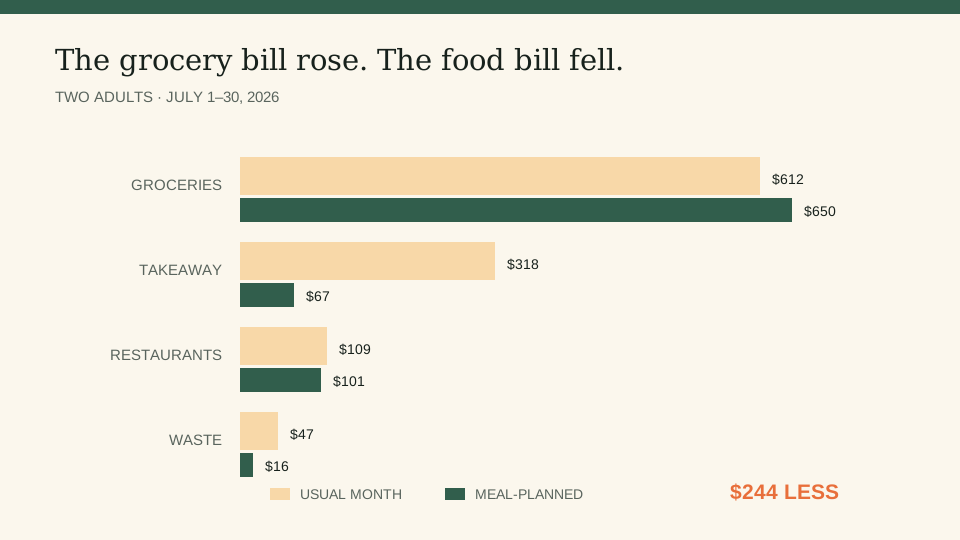
The complete bill
| Category | Usual month | Planned 30 days | Change |
|---|---|---|---|
| Groceries | $612 | $650 | +$38 |
| Takeaway and delivery | $318 | $67 | −$251 |
| Restaurants | $109 | $101 | −$8 |
| Estimated discarded food | $47 | $16 | −$31 |
| Planning supplies | $0 | $8 | +$8 |
| Total | $1,086 | $842 | −$244 |
Our grocery bill increased 6.2%, which initially looked like failure. It was actually the mechanism. We bought enough food for Thursday and Friday instead of assuming optimism would feed us. Frozen dumplings, jarred curry, bagged salad, and two supermarket rotisserie chickens cost more than our most economical recipes but much less than delivery.
Week one: planning for imaginary energy
On July 1, we wrote seven dinners as if each evening would contain patience. By Thursday, the lentil dish required 55 minutes and three pans. We ordered $38 of Thai food, the only delivery order of the month. The ingredients survived, but the plan had confused aspiration with capacity.
For week two, we labeled meals “cook,” “assemble,” and “rescue.” Cook meant 30 minutes or more. Assemble meant sandwiches, tacos, or salad with a prepared protein. Rescue meant freezer food that could beat an ordering app to the table. That classification changed the outcome more than choosing particular recipes.
Week two and three: leftovers need an appointment
We scheduled leftovers for Wednesday lunch and Friday dinner instead of treating them as a moral obligation hovering in the refrigerator. Portions were packed immediately after dinner. By July 18, the waste container held half a cucumber, herbs, and a forgotten cup of rice—still waste, but less than the usual drawer of soft produce.
We estimated waste at purchase cost, not replacement cost. The planned month discarded about $16 of avoidable food, compared with $47 during our baseline audit. Peels, coffee grounds, bones, and planned scraps were excluded. The method is imperfect, but applying it consistently made the direction clear.
Week four: the plan became shorter
The first plan filled a sheet of paper. The last used nine lines: five dinners, two leftover slots, one rescue option, and one restaurant meal. Breakfast repeated. Lunch drew from leftovers, eggs, soup, and sandwiches. We spent 14 minutes planning on July 26 and 46 minutes shopping the following morning.
Restaurant spending barely changed because we kept a Saturday meal out. That was deliberate. Removing something we enjoyed would have made the total look better for 30 days and the routine less likely to survive August. The $244 reduction came almost entirely from replacing unplanned delivery, not eliminating social meals.
What the total leaves out
We did not assign a dollar value to cooking or planning time. Across the month, dinner preparation averaged 31 minutes on cook nights and 12 minutes on assemble nights. Planning and list-making totaled 93 minutes. Those are real costs. For someone working two jobs or managing care, a higher food bill may buy necessary time rather than signal poor planning.
We also did not chase coupons across stores. All main shops happened at the same supermarket, with one produce-market stop. Fuel and membership fees were zero. This made the experiment repeatable and kept the savings attributable to behavior rather than a temporary promotion.
The version we are keeping
Our August plan keeps five features: inventory before ideas, two low-energy meals, one leftover appointment, one enjoyable meal out, and a grocery ceiling based on the full food category. That last point matters. Spending $20 more at the supermarket can be sensible if it prevents a $55 delivery.
The budget view follows the same principle in our Sunday money reset: look at the whole decision, not one isolated category. Readers who need a tool for flexible categories can compare our seven tested budgeting apps. For definitions such as sinking fund and cash flow, the plain-English money glossary is a useful companion.
Thirty days did not make us people who always know what we want for dinner. It gave indecision a cheaper default. The result was not culinary perfection. It was a freezer option on the evening when perfection was never coming.
30 Days of Meal Planning FAQ
How much did 30 days of meal planning save?
Our two-adult household spent $842 versus a $1,086 recent monthly average, a $244 reduction. Results depend on location, household size, baseline habits, and available cooking time.
Did meal planning lower the grocery bill?
No. Groceries rose from $612 to $650 because we bought realistic backup meals. Total food costs fell because takeaway and delivery dropped from $318 to $67.
How far ahead should meals be planned?
One week was enough for us. We planned five dinners, one leftover slot, one rescue meal, and one meal out, then adjusted after checking the refrigerator.
Editorial note: This article reports a limited household test, not a universal spending rule. See how LedgerLark tests and edits.